



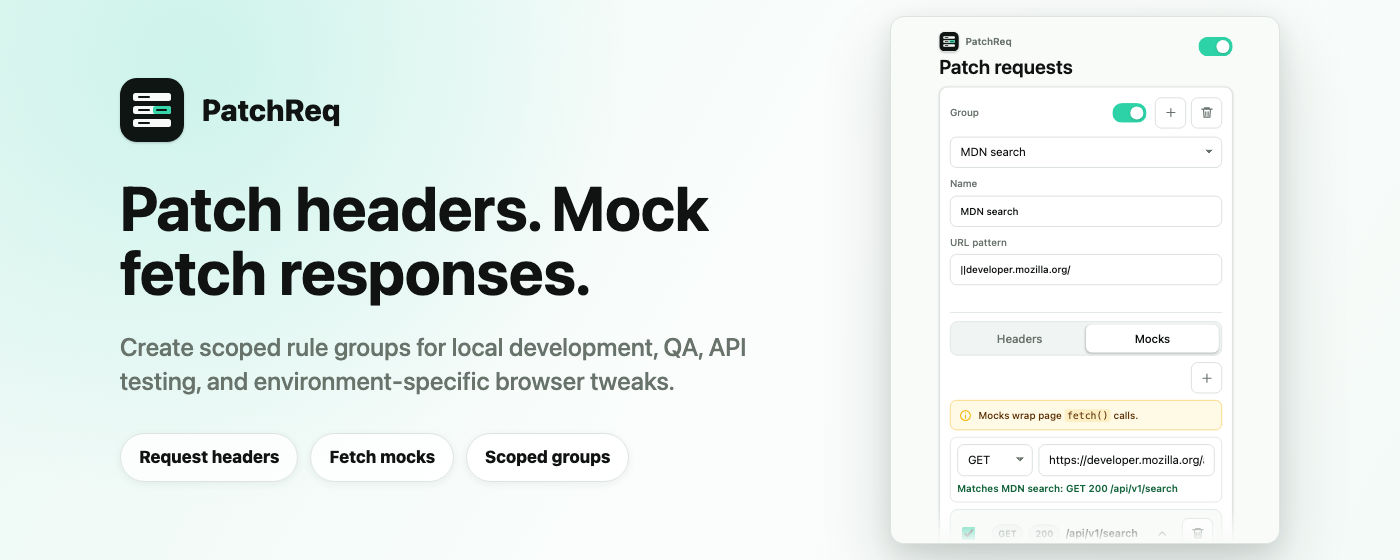
PatchReq

Chrome extension for scoped request patching

PatchReq

Patch request headers and mock fetch responses in Chrome with scoped local rule groups.

Runs locally in ChromeExplicit group scopesRedacted match logs

01 / Scoped header rules

Patch request headers inside explicit local groups.

Create groups for a host, route, or local workflow, then set, overwrite, or remove request headers only inside that scope.

Groups require URL patterns so broad changes are deliberate.

Toggle the whole extension, a group, or a single rule while testing.

Use it for auth tokens, environment flags, and per-route debugging.
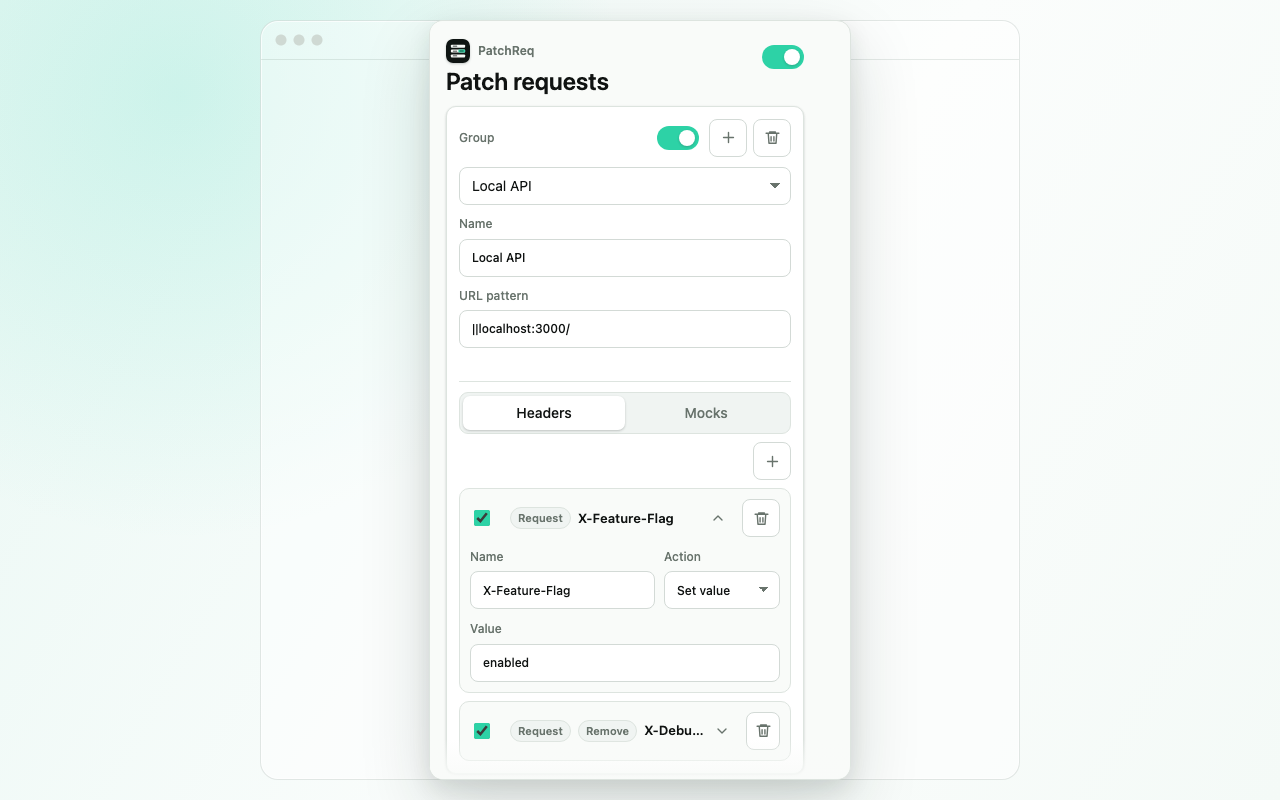
PatchReq header rules screen with scoped groups and request header rows
URL pattern -> enabled group -> request header patch
02 / Fetch response mocks

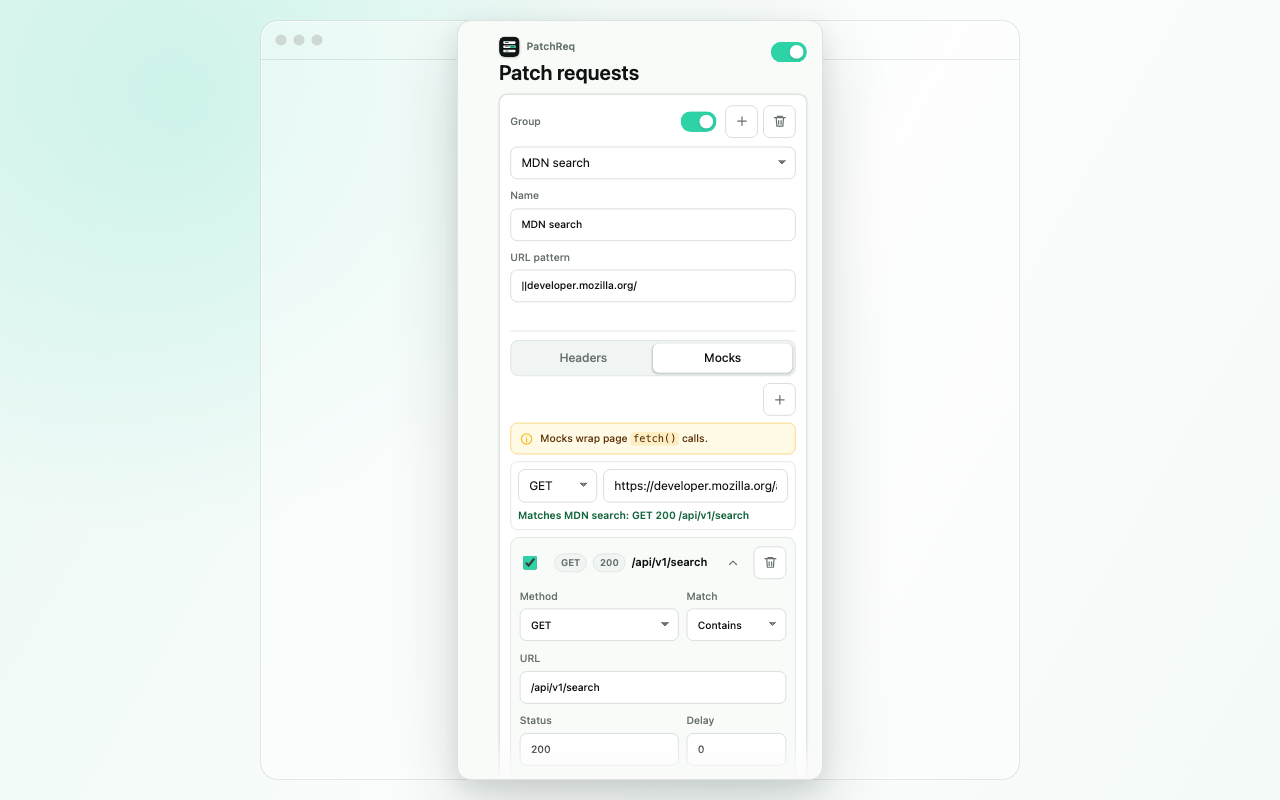
Return mocked fetch responses without changing app code.

Define a mock for a matching fetch call and PatchReq returns the response locally in Chrome, useful for local dev, QA, and API testing.

Exercise loading, empty, success, and error states against the same frontend.

Mock status, response headers, and JSON payload shape for matching requests.

Mocks stay scoped to the rule group you enable.

PatchReq fetch mock editor with Test URL, method, match, URL, status, and delay fields
fetch('/api/orders') -> scoped mock response

03 / Local-first privacy and security

Built for local browser workflows, not data collection.

PatchReq runs locally in Chrome. Rule scope, redacted logs, and explicit toggles keep network changes understandable and contained.

No accounts or remote service are required for request patching.

Scoped groups prevent accidental broad changes across unrelated browsing.

Security caveats are surfaced as validation states, not hidden behind silent rules.

PatchReq local rule groups configured in the Chrome extension popup
URL pattern -> enabled group -> request header patch

Install PatchReq

Patch headers and mock fetch responses from Chrome.

Keep rule groups local, explicit, and easy to debug while you build against real or mocked API behavior.